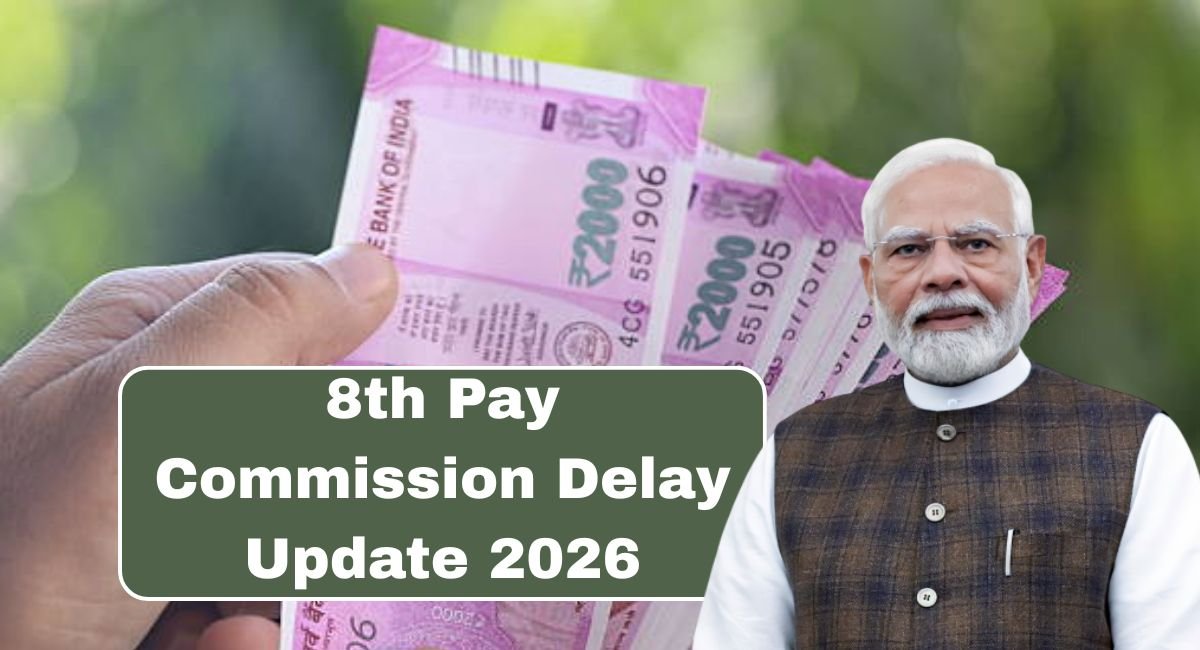
Big News for Government Employees The 8th Pay Commission is one of the greatest topics for central government employees and pensioners in India. Millions of employees are so excited in pending salary and allowances upgrades. The pay commission was supposed to start from 1 January 2026, but it is almost sure that the actual implementation will take more time. In the meantime, government has begun consultations and summoned suggestions from employees and pensioners.
What Exactly is the 8th Pay Commission?
The Pay Commission refers to a government board that is formed every 10 years to carry out a review on the salaries as well as pensions, among other benefits due to the central government employees. Each time with a span of 10 years, such recommendations from a Pay Commission are supposed to be gobbling up and subsequently there will be a significant change. The employees working with the central government are estimated to be around 50 lakh and approximately 65 lakhs will be benefited from pension-wise reform that is little more than was proposed by the 7th Pay Commission.
Why Delay in its Implementation?
Notwithstanding that effective is anticipated beginning January 2026, the new pay structure, however, is expected to take a bit longer to get the implementation up and running as the commission first studies economic conditions, gathers suggestions and prepares a comprehensive report. According to the experts, the final recommendations may be made by the Commission 18 months after its constitution.
The revised pay structure could thus be rubber-stamped and implemented by the government sometime toward the end of 2026 or early 2027.
Government Invites Suggestions from Employees
Herein lies a linked updated version. There it says that the Central Government is inquiring of suggestions from central government employees, pensioners, and trade unions vis-a-vis wage and status allowances as well as pension reforms development. This query may be submitted on an online portal by April 30, 2026.
This is an important event consequent to standing the final recommendations which are designed.
Expected Salary Increase and Fitment Factor
Governments in general accept lower salary implications which include job security. Restricted earnings may indicate companies in a business showcase will have to give the greatest possible benefit to enter the market. Low wages will bring job insecurity and its composition may possibly expand, a phenomenon usual in countries that have an unstable economy. But the government has known to put up a hefty led wage hike following the protest against the Seventh Pay Commission last year, even though it has affected the salary of employees in such institutions.
It’s estimated that for the new pay commission, the minimum basic salary will increase to maybe around Rs 44,000 from Rs 18,000. The real quantum of the hike would depend on the fitment factor used for ascertaining the new basic salary.
An increase in fitment factor might, in fact, pave the way for salary rises by 30% or even more.
Possibility of Getting Arrears
As a result of the delay, arrears for the months since the salary structure became effective but was hitherto not implemented at the workplace would be paid. In previous pay commissions, arrears were paid when the new pay structure developed by them was authorized.
By some estimates, these arrears might run into several lakhs of rupees, depending on the grade and years of service of government employees.
Other Expected Benefits
Apart from an increase in wages, the 8th Pay Commission might introduce amendments or changes in benefits due to:
- Dearness Allowance (DA)
- House Rent Allowance (HRA)
- Travel Allowance
- Pension benefits
- Medical allowances
That employee unions have also suggested marrying 50% DA with the basic salary is a step in making the financial benefits better.
Conclusion
It is expected that the 8th Pay Commission, which is scheduled to be implemented in the fiscal year 2026, will bring important financial strides to salaries and pensions of government employees. However, the process could take time as the government has to check the existing economic conditions and employee demands.
In fact, if at all the implementation gets a late start, they would get money in hand, starting from January 2026, so that not one of them stand to lose financially. The coming months will be critical months, as talks and deliberations continue, and the government nears its final list of recommendations.