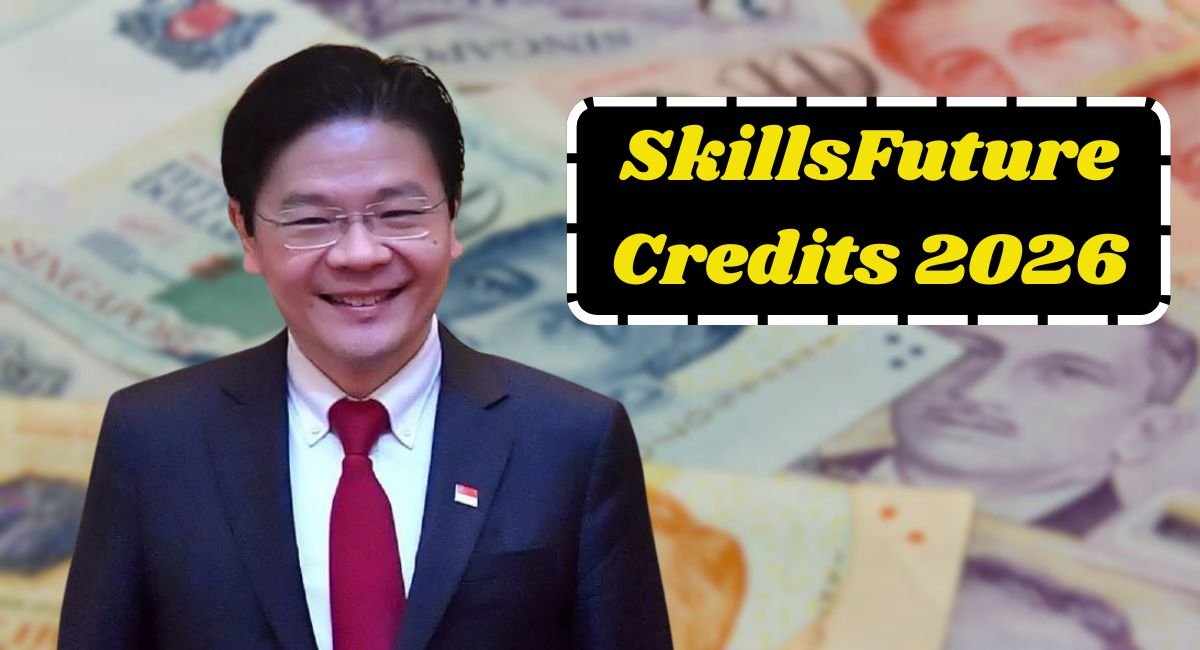
Singapore’s government is willing to further commit big amounts of their budget to lifelong learning, training, and other labor force progression activities, the most remarkable of which is being earmarked for the SkillsFuture Credit program.
SkillsFuture Credits 2026 implies that Singaporeans can upgrade their skills and better their career prospects through government fiscal support. Fast revolutionization of industries, fueled by technology and automation, means that continuous vocational learning and further education are now prerequisites for career progress.
This piece explains about the program of government belonging to SkillsFuture Credit 2016; credit amounts and how Singapore citizens can benefit from it, as well as which people are eligible, in detail.
What is Skills Future Credit?
It is a government scheme that encourages individuals to take up lifetime learning or professional development; Skills Future Credit by the Government will provide identified credits that any given person can use to settle for recognized training courses.
These credits can be used for technology-related classes, digital skills, business management, healthcare, and many other professional university programs. Therefore, the program helps individuals to become more and more competitive in the contemporary job market by catering to them with the means to education and training.
It also accomplishes the purpose of setting a highly skilled, adaptable workforce to fulfill the long-term goal of Singapore.
Skills Future Credits 2026 Overview
The following is a simple outline of the SkillsFuture Credit program:
| Feature | Details |
|---|---|
| Program Name | SkillsFuture Credit |
| Country | Singapore |
| Target Group | Singapore citizens aged 25 and above |
| Benefit | Training credits for approved courses |
| Purpose | Support lifelong learning and career development |
| Usage | Professional courses, skills training, and certifications |
The citizens with credits may pursue learning over their careers for a determination of upgrading their professional skills as they go.

Eligibility for Skills Future Credits
Qualifying SkillsFuture Credits involves meeting specific criteria.
The person involved should necessarily be considered a Singaporean citizen. Second to that, there should be empowering them through these skills.
If qualified, the beneficiary is issued in his/her individual SkillsFuture account. An amount of this fund can be utilized to pay for such courses taken with respect to approved training programs.
Another reinforcement to be done by the government to ensure equal distribution of results is that in most cases they support encouraging citizens who wish to upgrade their competencies and advance in their careers.
How Skills Future Credits Usage Will Be Done
In shaping the future beyond 2026, SkillFuture Credits can be used broadly across several training programs that involve in upgrading the career from I to any level.
Use it by paying for online courses, professional certification, industrial training, technical skills development courses. Several training establishments and educational platforms are into the SkillsFuture Credit scheme.
Through the credits, people upgrade their skills, switch careers, or improve their promotion prospects in their present professions.
Why Skills future Credits
There are certain important aspects of this argument with reference to Skills-future Credit that is extended to Singaporeans.

First of all, this helps to bring down the entire cost of the course; that is, being affordable secures education and training. Next, it promotes constant growth in all sectors on the job, something all workers will need in such a current uptick of change in the job market.
With every course fitting under their career goals and interests, the flexibility provided to allow the choosing of courses from those provided within the SkillsFuture Credit Program is the next benefit.
In the broader context, through this initiative there is an enhancement both of individual career growth and the national workforce competitiveness.
Conclusion
By the year 2026, the SkillsFuture Credits program will still be a central initiative in rebuilding the nation into a lifelong-learning state. This monetary support for education and training in skills is still more than vital, supporting competitiveness with the changes in the job market.
As the times move along, then, indeed, programs to assist in stronger careers sound promising. Skills Future, by inference, leads on to greater success in careers for Singaporean citizens for the long haul.